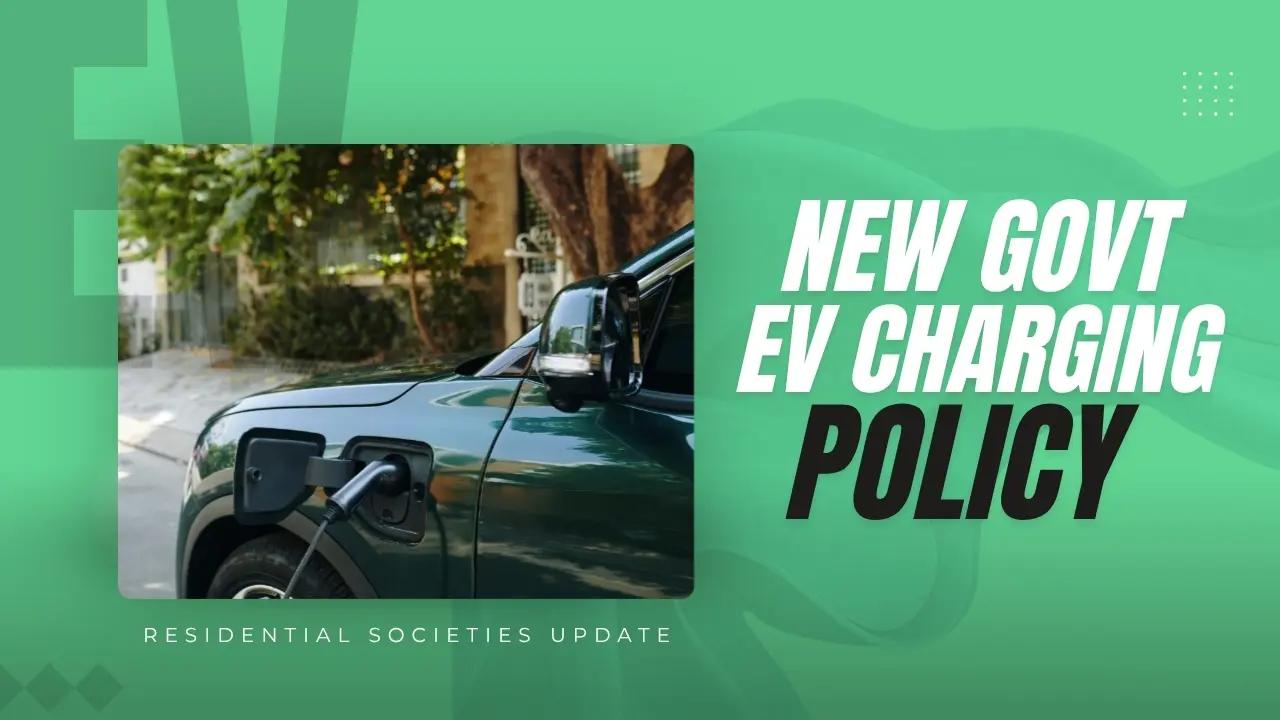

India’s transition to electric mobility is gaining strong momentum, and government policies are playing a critical role in shaping the ecosystem especially within residential societies. As electric vehicles (EVs) become more common in urban communities, the need for accessible, safe, and scalable charging infrastructure at home is more important than ever. Recognizing this, central and state governments have introduced a range of policies and guidelines to simplify EV charger installation and promote adoption within apartment complexes and gated communities.
A Policy Push Toward Home Charging Infrastructure
Home charging is the backbone of EV usage in India. Most EV owners prefer charging their vehicles overnight, making residential societies a key focus area for infrastructure development. To support this, the government has clarified that setting up private EV charging stations at residences does not require a separate license. This policy shift has significantly reduced regulatory barriers, encouraging homeowners and housing societies to install chargers without complex approvals.
Additionally, guidelines from the Ministry of Power have made it clear that EV charging is treated as a service rather than the resale of electricity. This distinction allows residential communities and third-party operators to provide charging services with simplified compliance requirements, opening the door for organized and scalable charging setups.
Role of State-Level EV Policies
Several Indian states have gone a step further by introducing dedicated EV policies that directly address residential charging challenges. States like Delhi, Maharashtra, Telangana, and Karnataka offer incentives such as subsidies on charger installation, reduced electricity tariffs for EV charging, and support for infrastructure upgrades.
For example, the Delhi EV Policy mandates that new residential buildings must be EV-ready, with a certain percentage of parking spaces equipped for charging. Similarly, other states are encouraging retrofitting in existing societies by offering financial support and streamlined approval processes. These initiatives are helping bridge the gap between EV adoption and charging accessibility in high-density urban areas.
Simplifying Installation in Apartment Complexes
One of the biggest challenges for EV owners in apartments has been obtaining permission and managing infrastructure constraints. Government guidelines now emphasize the rights of residents to install charging points in their designated parking spaces, provided safety standards are met.
Discoms (electricity distribution companies) are also being directed to facilitate connections for EV charging with minimal delays. In many cities, residents can apply for a separate electricity meter dedicated to EV charging, ensuring transparent billing and preventing disputes within housing societies.
Moreover, policies are encouraging the use of shared charging infrastructure within societies. This approach optimizes space and electrical capacity while making charging accessible to multiple users, especially in communities with limited parking or high EV density.
Focus on Safety and Standardization
To ensure safe deployment, government regulations include clear technical standards for EV charging equipment and installation. These cover aspects such as wiring, load capacity, fire safety, and certified hardware. Standardization not only reduces risks but also ensures compatibility across different EV models and charging systems.
Smart charging solutions are also being promoted, enabling features like load management, remote monitoring, and scheduled charging. These technologies help residential societies manage electricity demand efficiently while avoiding overloads and power disruptions.
Financial Incentives and Tariff Benefits
Cost has been a major concern for both individuals and housing associations. To address this, various subsidies and incentives are being introduced at both central and state levels. Reduced GST rates on EV chargers, capital subsidies for infrastructure, and special EV tariffs are making charging more affordable.
Time-of-day tariffs are another important development. These encourage EV owners to charge during off-peak hours when electricity demand is lower, reducing strain on the grid and lowering energy costs. Such measures not only benefit users financially but also improve overall energy efficiency.
Encouraging Private Participation and Innovation
Government policies are also fostering collaboration between residential societies and private EV charging providers. This has led to the emergence of turnkey solutions where companies handle everything from site assessment and installation to maintenance and billing.
These partnerships are particularly valuable for large housing communities that require scalable and professionally managed charging systems. By integrating software platforms, societies can track usage, automate billing, and ensure fair access to charging facilities.
The Road Ahead for Residential EV Charging
India’s EV future depends heavily on how effectively residential charging infrastructure is developed. Government policies are clearly moving in the right direction by reducing barriers, offering incentives, and promoting standardization.
As EV adoption continues to rise, residential societies will play a central role in supporting daily charging needs. The focus is gradually shifting from individual installations to community-wide solutions that are efficient, scalable, and technology-driven.
Supporting Smarter EV Charging with GoLumo
As policies continue to strengthen the EV ecosystem, technology providers are enabling real-world implementation at scale. GoLumo supports residential societies with intelligent EV charging solutions designed for seamless integration, efficient energy management, and user-friendly operation. From installation and smart monitoring to automated billing and maintenance, GoLumo empowers housing communities to adopt EV charging infrastructure with confidence. Through its franchise model, it also enables entrepreneurs and property owners to participate in India’s growing EV ecosystem while contributing to a cleaner and more sustainable future.